
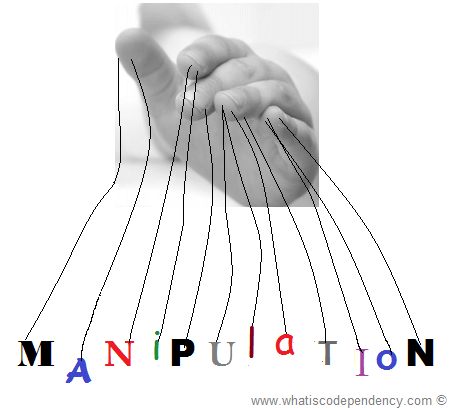
 We all want to get our needs met, but manipulators use underhanded methods. Manipulation is a way to covertly influence someone with indirect, deceptive, or abusive tactics. Manipulation may seem benign or even friendly or flattering as if the person has your highest concern in mind. In reality, it’s to achieve an ulterior motive.
Sometimes, it’s veiled hostility. It can be abusive and the objective may purely be power. You may not realize that you’re being intimidated. If you grew up being manipulated, it’s harder to discern what’s going on, because it feels familiar.
You might have a gut feeling of discomfort or anger, but on the surface, the manipulator may use words that are pleasant, ingratiating, reasonable, or that play on your guilt or sympathy, so you override your instincts and don’t know what to say.
Manipulative Tactics
Favorite weapons of manipulators are guilt, complaining, comparing, lying, denying (including excuses and rationalizations), feigning ignorance, or innocence (the “Who me!?” defense), blame, bribery, undermining, mind games, assumptions, “foot-in-the-door,” reversals, emotional blackmail, evasiveness, forgetting, fake concern, sympathy, apologies, flattery, and gifts and favors. Manipulators often use guilt by saying directly or through implication, “After all I’ve done or you,” or chronically behaving needy and or helpless. They may compare you negatively to someone else or rally imaginary allies to their cause, saying that, “Everyone;” “Even so and so thinks XYZ” or, “says XYZ about you.”
Some manipulators deny promises, agreements, or conversations, or start an argument and blame you for something you didn’t do to get sympathy and power. This approach can be used to break a date, promise, or agreement. Parents routinely manipulate with bribery – everything from, “Finish your dinner to get dessert,” to “No video games until your homework is done,” but this isn’t done with aggressive intent, but to encourage children to do the right thing. It’s far different if a narcissistic parent manipulates to belittle or undermine a child.
Manipulators often voice assumptions about your intentions or beliefs and then react to them as if they were true in order to justify their feelings or actions, all the while denying what you said in the conversation. For example, your spouse might falsely accuse you of still having feelings for your ex, and then retaliate with threats or a refusal to attend an event important to you. Another manipulation is acting as if something has been agreed upon or decided when it hasn’t in order to avoid your input or objection.
The “foot-in-the-door” technique is making a small request that you agree to, which is followed by the real request. It’s harder to say no, because you’ve already said yes. The reversal turns your words around to mean something you didn’t intend. When you object, manipulators turn the tables on you and act like the injured party. Now it’s about them and their complaints, and you’re on the defensive. Fake concern is sometimes used to undermine your decisions and confidence in the form of warnings or worry about you.
See all The Covert Tactics Manipulators Use to Control and Confuse You.
Emotional Blackmail
Emotional blackmail is abusive manipulation that may include the use of rage, intimidation, threats, shame, or guilt. Shaming you instills self-doubt to make you feel insecure. It can even be couched in a compliment: “I’m surprised that you of all people you’d stoop to that!” A classic ploy is to frighten you with threats, anger, accusations, or dire warnings, such as, “At your age, you’ll never meet anyone else if you leave;” “The grass isn’t any greener;” or, playing the victim: “I’ll die without you.”
Blackmailers may also frighten you with anger, so you sacrifice your needs and wants. If that doesn’t work, they sometimes suddenly switch to a lighter mood. Now you’re so relieved that you’re willing to agree to whatever is asked. They might bring up something you feel guilty or ashamed about from the past as leverage to threaten or shame you, such as, “I’ll tell the children about you if you don’t do what I want.”
Victims of blackmailers with certain personality disorders, such as borderline or narcissistic PD, are prone to experience a psychological FOG, which stands for Fear, Obligation, and Guilt, an acronym created by Susan Forward. The victim is made to feel afraid to cross the manipulator, feels obligated to comply with his or her request, and feels too guilty not to do so. Shame and guilt can be used directly with put-downs or accusations that you’re “selfish” (the worst vice to many codependents) or that “You only think of yourself,” “You don’t care about me,” or that “You have it so easy.”
Codependency
Codependents are also easy prey for being manipulated by narcissists, borderline personalities, sociopaths, and other codependents, including addicts.
Codependents have trouble being direct and assertive and may use manipulation to get their way. They may say whatever they think someone wants to hear to get along or be loved, but then later they do what they want. This is also passive-aggressive behavior. Rather than answer a question that might lead to a confrontation, they’re evasive, change the topic, or use blame and denial (including excuses and rationalizations), to avoid being wrong. Because they find it so hard to say no, they may say yes, followed by complaints about how difficult accommodating the request will be. When confronted, codependents have difficulty accepting responsibility because of their deep shame. Instead, they deny responsibility and blame, make excuses, or make empty apologies to keep the peace.
They use charm and flattery and offer favors, help, and gifts to be accepted and loved. Criticism, guilt, and self-pity are also used to manipulate others to get what they want: “Why do you only think of yourself and never ask or help me with my problems? I helped you.” Acting like a victim is a way to manipulate with guilt.
Addicts routinely deny, lie, and manipulate to protect their addiction. Their partners also manipulate for example, by hiding or diluting an addict’s drugs or alcohol or through other covert behavior. They may also lie or tell half-truths to avoid confrontations or control the addict’s behavior.
Passive-aggression
Passive-aggressive behavior can also be used to manipulate. When you have trouble saying no, you might agree to things you don’t want to, and then get your way by forgetting, being late, or doing it half-heartedly. Typically, passive-aggression is a way of expressing hostility. Forgetting “on purpose” conveniently avoids what you don’t want to do and gets back at your partner – like forgetting to pick up your spouse’s clothes from the cleaners. Sometimes, this is done unconsciously, but it’s still a way of expressing anger. More hostile is offering desserts to your dieting partner.
How to Handle Manipulators
The first step is to know whom you’re dealing with. Manipulators know your triggers! Study their tactics and learn their favorite weapons. Build your self-esteem and self-respect. This is your best defense! Also, learn to be assertive and set boundaries. Read How to Speak Your Mind: Become Assertive and Set Limits or watch the webinar How to Be Assertive. For techniques and scripts for dealing with difficult people, read Dating, Loving, and Leaving a Narcissist: Essential Tools for Improving or Leaving Narcissistic and Abusive Relationships. Contact me to join my mailing list and receive a free report “12 Strategies to Handle Manipulators.”
© DarleneLancer 2014