
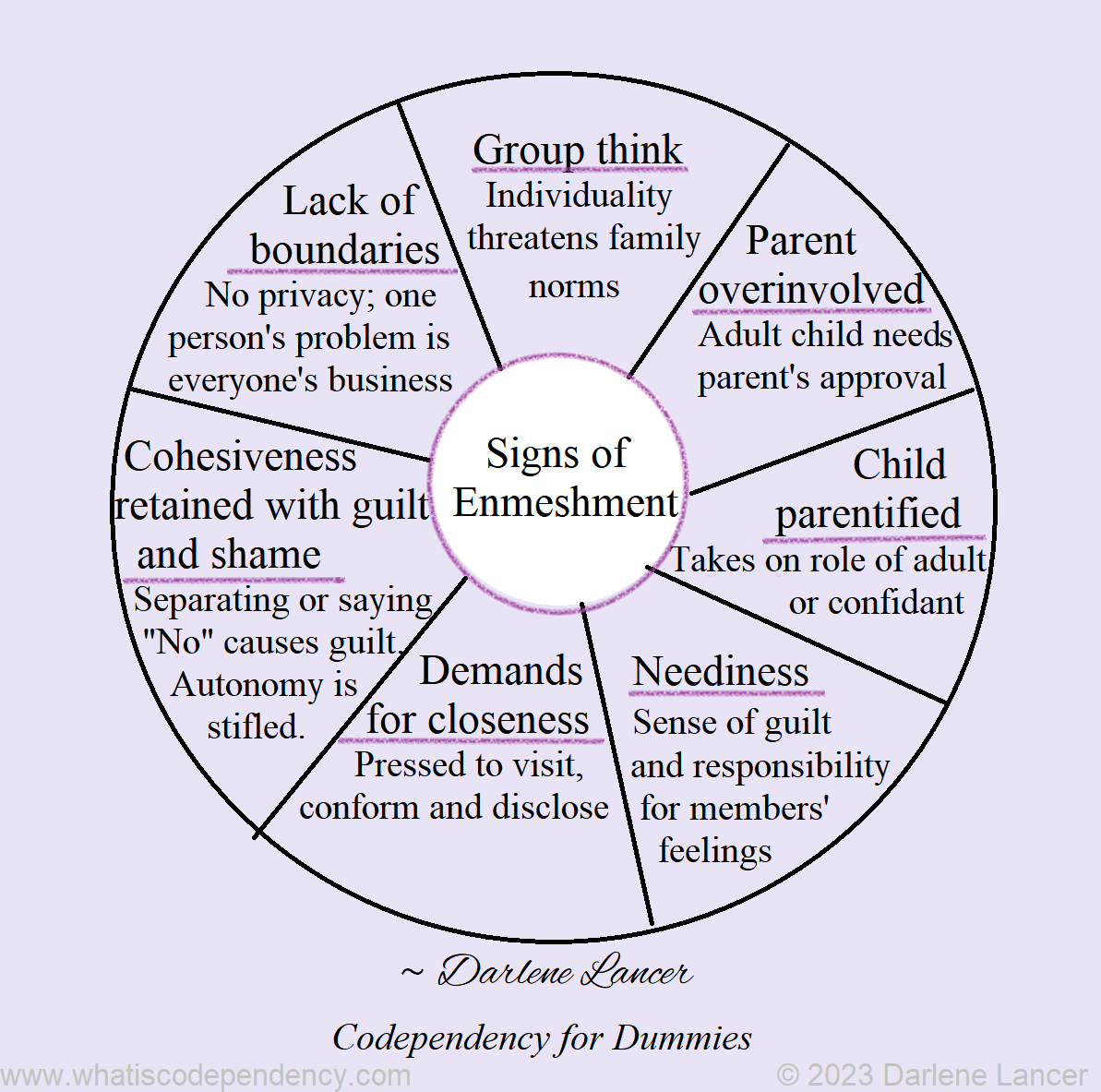
 Enmeshment may be difficult to recognize because it can seem like love, loyalty, or normal family devotion. However, it may sometimes feel like an obligation, guilt, or anxiety, or that you’re responsible for other people’s feelings.
Family members may feel entitled to know everything about one another, expect agreement, become intensely involved in each other’s decisions, or experience another person’s emotions as though they were their own
Healthy families can be deeply connected while still allowing each person the freedom to have privacy, autonomy, different opinions, and a life of their own. Enmeshment happens when those distinctions become blurred. Family members become so emotionally intertwined that individual needs, feelings, choices, and identities are difficult to separate.
Signs of Enmeshment
Permeable emotional boundaries are typical with enmeshment. Signs include:
- Feeling guilty when you say no.
- Believing you’re responsible for another person’s happiness.
- Feeling disloyal when you make an independent decision.
- Having difficulty knowing what you actually want.
- Sharing personal information because privacy feels selfish or wrong.
- Feeling compelled to take sides in family conflicts.
- Experiencing another person’s disappointment as your own failure.
- Having difficulty tolerating disagreement or separation.
- Being expected to put family needs before your own.
- Feeling your independence is rejecting others.
- Difficulty tolerating other people’s feelings and reactions
Notice your reaction when you make a choice your family or partner doesn’t like. In healthy families, there may be disappointment, discussion, or disagreement. In an enmeshed system, independence may trigger guilt, anger, withdrawal, criticism, pressure, or accusations of selfishness.
Effects of Enmeshment
The effects can extend far beyond the original family relationship. When you grow up learning that closeness requires compliance, you can carry those expectations into adulthood.
Effects on the Self: Identity and Boundaries
The most significant effect is a weakened sense of identity. If your feelings and preferences were continually overridden, questioned, or treated in conflict with the family’s, it can become difficult to distinguish your authentic feelings and desires. You may find yourself asking, What do I want? What do I believe? What would I choose if nobody were disappointed?
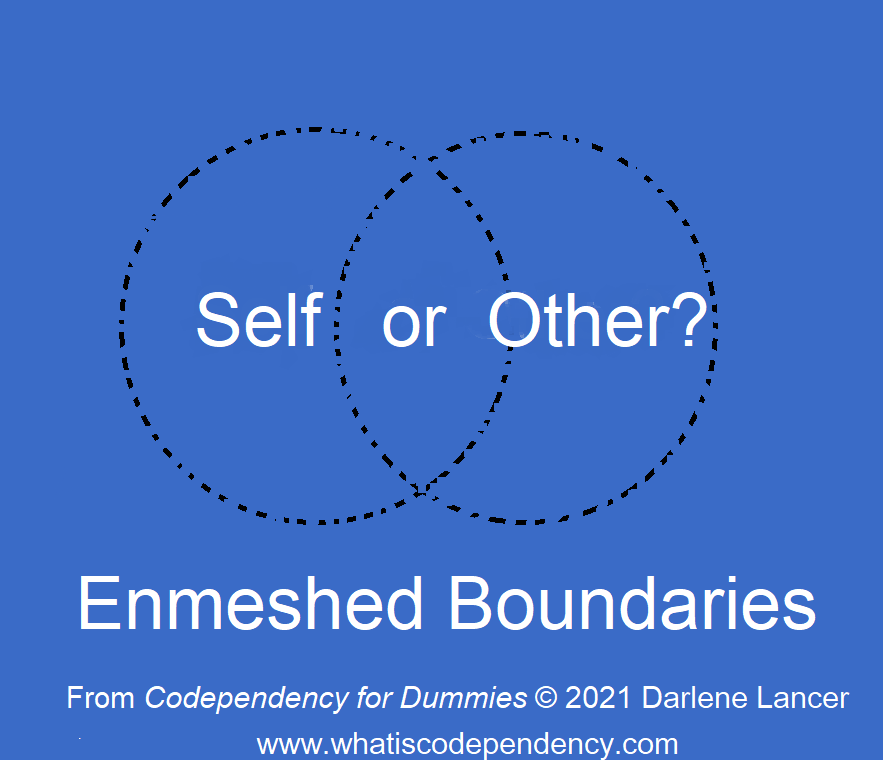 This makes it difficult to set boundaries. You may over-explain ordinary decisions, apologize for having needs, or automatically say yes before considering whether you actually want to help.
Some people become chronic people-pleasers. Others swing in the opposite direction, become extremely independent, have rigid boundaries, and avoid dependence because it feels dangerous. Both responses can develop from not learning that healthy closeness and separateness can coexist.
Effects on Relationships
Enmeshment influences friendships, romantic relationships, and parenting. You may become overly responsible for your partner’s emotions and tolerate intrusive behavior because it feels familiar. Then, someone else’s separateness, distance, or independence may make you anxious or feel abandoned. The attachment pattern can become a self-reinforcing “Dance of Intimacy.” Anxiety leads to over-involvement that creates resentment, leading to our partner’s withdrawal, and withdrawal increases your anxiety.
Alternatively, emotional closeness may feel intrusive and trigger a fear of engulfment—the fear that intimacy will consume your independence or identity. You may keep people at arm’s length. This can create a painful push-pull pattern: you want connection, but pull away when someone gets too close. A partner may experience this as rejection, while you experience their need for closeness as pressure or intrusion.
Healing means learning that intimacy and autonomy can coexist. You can be deeply connected to someone without losing your identity, boundaries, or independence.
Codependency
Enmeshment contributes to codependent patterns, particularly when a person has learned that their value comes from meeting other people’s emotional needs. They may become the caretaker, fixer, mediator, or rescuer in relationships, while neglecting their own needs. Most codependents feel responsible for keeping a partner, parent, or friend stable and happy. They are vulnerable to manipulation by needy and personality-disordered people because setting boundaries can trigger guilt, and someone else’s distress can feel like a problem you must tend to.
Over time, this can create relationships in which one person’s needs dominate, and the other person continually accommodates, rescues, or sacrifices. The result may be resentment, exhaustion, and a diminished sense of self.
Enmeshment can make it difficult to accept that someone you love is a separate person rather than an extension of yourself. You may try to change your partner’s behavior, opinions, habits, or even personality because their differences feel threatening or uncomfortable. What begins as concern or “wanting the best for them” can become criticism, pressure, or control, common among codependents. However, helping, caretaking, or accommodating can undermine your own identity, boundaries, or well-being.
In addition, your partner may feel judged or controlled, while you become increasingly frustrated that they aren’t becoming the person you want them to be. Healthy relationships involve mutual support and require accepting your partner as a separate individual—not trying to reshape them into someone who makes you feel more secure.
Enmeshment Is Transmitted Through Family Systems
Enmeshment is often a pattern that develops over generations. Parents may have learned from their own families that closeness means sacrifice, obedience, secrecy, or unquestioned loyalty. They may then unintentionally reproduce those rules with their children.
For example, if a parent has never learned to regulate their own emotions, they may rely heavily on a child for comfort or companionship. The child learns that being needed is the price of belonging. This can also lead to parentification and/or triangulation of a child.
Another family may operate according to the rule that everyone must agree. Individual opinions are treated as criticism of the family. Still another may use guilt to maintain closeness: After everything I’ve done for you…These patterns can become part of the family’s unspoken operating system.
Recovery means individuating from your original family system, so that you determine your feelings, perceptions, beliefs, needs, and wants and authentically express yourself.
The Damage of Enmeshment
Enmeshment interferes with your autonomy. When independence repeatedly produces guilt or conflict, you may learn to suppress your preferences, or even safety, to preserve connection. The connection, stemming from a childhood need, can give you the illusion of safety when, in fact, you’re not.
Over time, this can contribute to chronic self-doubt, difficulty making decisions, resentment, emotional exhaustion, and unstable boundaries. The damage can be particularly confusing because you may genuinely love your partner or family and recognize that they have good intentions, yet still feel trapped.
Love does not eliminate the need for boundaries. A family can love one another and still have unhealthy patterns. A parent can love a child and still be overly involved. An adult child can love a parent and still decide that certain conversations, demands, or behaviors are no longer acceptable.
Healing: Changing the Pattern
Healing from enmeshment isn’t about becoming cold, detached, or indifferent. It’s learning that connection doesn’t require the loss of individuality.
- Notice the Pattern
Before changing a family dynamic, identify what actually happens. Notice your triggers. When do you feel guilty, obligated, responsible, or afraid of someone’s reaction? Ask yourself: Am I doing this because I genuinely want to, or because I’m afraid of what will happen if I don’t? Does this remind me of a childhood pattern?
- Practice Small Boundaries
Boundaries don’t have to begin with dramatic confrontations. Start small. Instead of immediately responding, say, “Let me think about it.” Instead of explaining every decision, say, “I’ve decided what works for me.” Instead of taking responsibility for another person’s emotions, remind yourself, “My anxiety doesn’t mean that I did something wrong.” Notice that the relationship endures and you will survive.
- Rebuild Your Sense of Self
Discover preferences that aren’t based on family expectations. Notice what you enjoy, what you value, what you believe, and what you want your life to look like. It can help you make decisions without immediately seeking approval. You may initially feel selfish or uncomfortable. Your discomfort doesn’t necessarily mean you’re doing something wrong, only that you’re practicing something unfamiliar. Do the exercises in Codependency for Dummies.
- Allow Relationships to Change
When one person changes their role, the family system may resist. Someone accustomed to your compliance may interpret a new boundary as rejection. That doesn’t automatically mean the boundary is unreasonable. Healthy relationships can adapt to greater individuality. Unhealthy ones may become more distant. This is a good way to assess who adds to your growth and well-being.
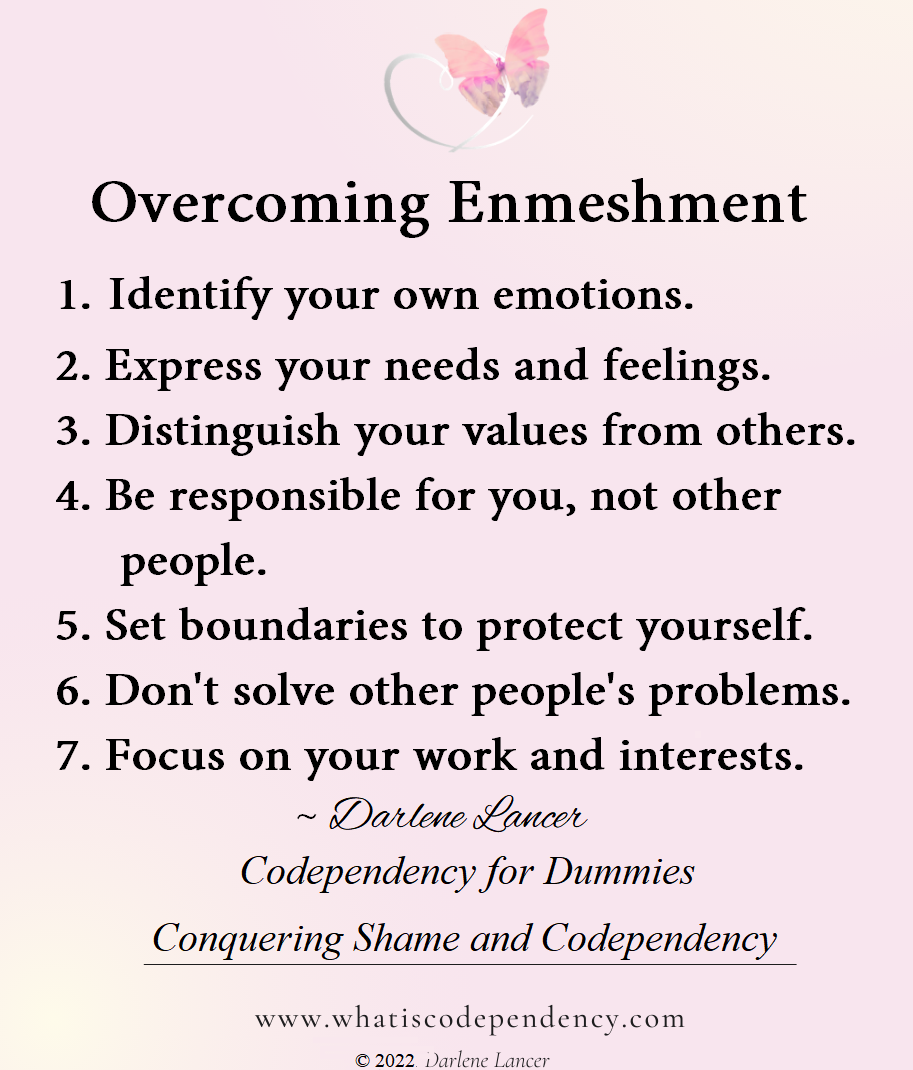 5. Consider Professional Support
Therapy can provide a place to examine family roles, attachment patterns, boundaries, and the beliefs that developed around closeness and independence. A therapist familiar with codependency, family-systems, or relational approaches can help you understand both your individual experience and the larger pattern in which it developed. Therapy can be a lab where you can practice new behaviors and set boundaries before doing so with loved ones.
Ultimately, healing from enmeshment means learning a different definition of closeness—one in which people can remain connected while still being separate, autonomous human beings. You become capable of love without making it the price of self-abandonment.
© 2026 Darlene Lancer